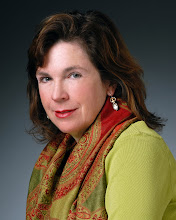
My new webpage for the novel is now up and reasonably complete. So from this point forward all future blog entries will be on www.loveinmidair.com.
Visit me, please. It's lonely out here!
I'm keeping this blogspot open as a record of what the last year of preparing for publicaiton was like...something for future internet anthropologists to dig up with their google spades and a record of the fact that writing, selling, editing, and publishing a book is hard. Hard! I don't think I'll be one of those writers who, post publication, forgets how tough the process is and starts giving their fellow writers a bunch of namby-pamby platitudes about the joys of the creative process. I don't THINK I'll be one of those vapid, annoying people but just in case I want to make sure the record of my whining stands. For my own sake, at least.
That's it! Thanks for reading! And please join me on the new site.
Monday, January 4, 2010

Monday, December 28, 2009
Four calling birds
I always liked the song "The Twelve Days of Christmas" and the idea that the holiday season used to begin on December 25 and continue on for twelve days, culminating in the celebration of the Epiphany on January 6. It seems a more sane and balanced way to celebrate than our modern way of bookending the season with Christmas carols that start on some warm day in October and end about 5 pm on December 25th. The way we do it now, people are ready for Christmas to be over before it even starts.
So....if we were celebrating in the traditional way this would be the fourth day of Christmas. Four calling birds. I don't know why that popped in my head today but it seemed strangely aligned with the task in front of me now, which is writing four chapters in a row. Four chapters at the beginning of the Ballroom book told from the point of view of my main character, Abby. Why am I struggling with this so much? Fighting it so hard? Part of my resistance, I suspect, is that I don't really believe I can sell a novel on spec. I know I'm driving my agent crazy because, as we get closer to the pub date of the first book, I'm driving myself crazy. He's given me a task to keep me sane and he knows that even if we can't sell the ballroom book based on four chapters at least it won't be wasted effort - I'll be that much farther along on the complete draft that will probably really be required.
I know all this, and I know it's smart for me to get a good strong set up under my belt, a segment of 50 or so pages that really establish Abby's voice and lay out the key questions of the book. The trouble is I don't usually write in sequence...I usually bounce all around, writing in an instinctual fashion and then, when I have a bunch of scenes, I go back and think about structure. A lot of stuff gets moved and a lot of stuff gets cut so writing out of sequence isn't an especially logical or time efficent route to a novel but it's the only one I know. The only way I seem to be able to get at the heart of my story and find the voice of my narrator.
And this might be what's wrong with me now. Alison said my character felt distant. This scares me. It means that I haven't yet tapped into the real story or made Abby's voice nuanced enough to seem alive on the page and perhaps I've been working so hard on plot and sequence, i.e., telling the story, that I haven't slowed down long enough to let myself find the story.
I don't know what to do. Soldier on and finish these four chapters, dead as they are? Four four four seems to ring in my head like the four calling birds in the song but I don't know if there's really anything magical about stringing four chapters in a row, Should I maybe go back to my old method of hopping about, writing only the scenes that are speaking to me? Of course, there are drawbacks to that method too. Namely, it takes longer to finish the novel because you spend so much time overwriting and running down blind alleys... and while you're doing all this no one gives you money based on your proposal because you can't get your shit together enough to offer up a proposal and how the hell am I suppsed to live in the meantime?
It's almost 2010. My goal for the new year is to get out of debt. A noble goal and a smart one but a hard thing for a writer to do. I'm trying to write fast and put together a proposal that will bring me an advance...then I can slow down, take a deep breath, and I'll have funds to live on while I finish the novel. But that doesn't seem to be working. So do I make a 180 turn and go into some other line of work to earn money, knowing that this choice will slow the novel down? Perhaps slow it down and make it richer....but definitely slow it down. And the idea of slowing down my already glacial writing pace even further makes me feel a little sick.
I'm in a dither. And the new year approacheth.
Tuesday, December 22, 2009
The two parts of writing that are fun
Lately I've been thinking that there are two parts of the novel writing process that I really enjoy. The first is the absolute beginning - when it's all nebulous. It's not a novel, it's a project - it doesn't have a name or a plot or fully-formed characters. What it probably does have, at least for me, is a voice.
So I get these little snatches of ideas. A sentence or two, an image. Someone says something that triggers a scene. I begin to write these snippets down, helter-skelter, and throw them into a folder. I love this part, the very beginning, when it's all embriotic and unformed.
The other part that's fun is the ending. You basically have the book and the structure and now you're tweaking. Going in to expand a scene that has more possibility than you've truly realized, looking for places where you've repeated words, making sure your verb tenses agree, pruning out the extraneous line or word.
But between these two lies the actual writing, especially the dreaded First Draft.
Which is where I stand now with Ballroom. My agent David feels that the hopping around scenes don't give him a strong enough sense of who the main character is and that any future possible one-chance-in-a-hundred buyers, i.e., editors, will want to see that one solid viewpoint character. So I'm back to the drawing board, trying to get three or four chapters in a row at the beginning, from Abby's point of view. And that feels dangerously like writing a first draft.
Yikes. I have a goal. I'm going to NYC sometime in late Feb or early March and I'd like to have the four chapters to him by then. Selling off a partial is a long shot in this environment, especially with my first book not yet out, but I feel I have to try. Otherwise I'm going to end up behind the counter at McDonalds. Or in the loony bin.
Monday, December 14, 2009
How long do you hang in there?
Last week a woman in my writing group announced that she wouldn't be writing any more. She written seven books over a number of years and spent time revamping, revising, earnestly searching for feedback from fellow writers. And it's led to zilch. She doesn't have an agent or a publisher. She has seven manuscripts that she could work on forever but she's not sure it's worth.
And a couple of days later a close friend said much the same thing. She's more than a decade into the process without any significant publication credits. She doesn't have the heart to start something new.
And then....someone I met at MacDowell sent me an email. He's been following this blog and was commenting on my last post, in which I was basically describing the freak out period I'm in now as I await publication, the "four months out" syndrome. He basically said "enjoy this level of misery for as long as you can because once your book actually come sout, it will get worse."
Writing can be a very dark path. My children are 21 and 25 and if either one of them said they wanted to be a writer I would try to talk them out of it.
And yet....
With writing there is always a "yet." Some book not yet written, the agent you haven't let queried, some subject not yet explored. Because on the night the woman in my writing group said she was done, a man in the group sat there and gave her the standard speech. How you have to do it for love. How you have to do it because you can't not do it. The pleasure and meaning are in the process, not the results.
All those things people say about writing that are corny and trite and true.
But everyone has to find the right balance inside their own head. If it's making you miserable - if the inability to find publication is obliterating the joy you find in the proess it may indeed be time to step away from the desk. At least for a while.
Thoughts?
Wednesday, December 9, 2009
Doubt
I'm in such a funk. I did a summary and four chapter package on the ballroom book and sent it to David, my agent. My friend Alison, currently vacationing in Europe, too a look at it too. I'm very excited about the book, excited about the concept and the fact I'm writing in third person from multiple POVs for the first time in my little baby novelist career. Of course I wanted both of them to gush it was the best thing I'd ever written or maybe even the best thing anybody has ever written.
Heard from both of them on Sunday. Nice but somewhat lukewarm responses. They liked the basic premise of the book - but they both called into question my use of the multiple POV. Alison called it "distant." David said "It's not what they're buying." They made the same argument. First person's my forte, after all. Why go against your natural tendancy as a writer - especially in light of the fact the market prefers books that are told from a single character's perspective?
On one level I'm like "Why indeed?" I know I'm stronger, or at least more experienced in first person. As my ever-practical friend Dawn says "That's what editors want and you know how to do it, so why are you so upset?"
Uh-huh. Uh-huh. Right. Everyone is being very kind and logical.
So why am I so upset?
Possible reasons:
1. The first person pov can limit the types of stories you're able to tell, especially in a situation like ballroom where I am writing about the need for community and how the ballroom means something different to every person who steps inside of it. You can get a broad perspective with first person pov but it's harder. I don't want to fall into the classic traps like having the other characters talk to Abby way too much.
2. I'm tired of the limitations of first person. Dawn said "If I could write first person as well as you, that's all I'd do." But she's just saying that because she's coming off two third person novels and she's sick of the limitations of THAT pov. There's a plus and a minus to every choice you make in writing, including pov, and it isn't a matter of one being inherently better than another. It's a matter of how you do one for a couple of projects, get sick of it, and when you switch to the other it seems easier - at least for a while. Then you get sick of it and switch back to your original pov for the next project. No nothing is perfect....but if you have some variety in your writing style you can write longer without wearing yourself out.
3. I don't want to be a one-trick pony. Yeah, first person's my strength but I'm ambitious, so of course I want to move on and learn a new skill. In dance the people who jive want to waltz, the people who samba wish they could quickstep. Part of it is our natural human tendancy to downplay our natural strengths - if something comes easily to us we erroneously assume it comes easily to everyone - but an equally valid part of it is a kind of creative restlessness that artists have to have if we're ever going to grow. The jivers might say to the waltzers some variation of what Dawn said to me, i.e., "If I could waltz as well as you do, that's all I'd ever want to do" - but it wouldn't be true. If we're good at something, we automatically look to move on and master something else. It's what gives us heart attacks and also, I suppose, why our species dominates the planet.
4. This is probably the real reason: I'm just in such an anxious state that I'm going to freak out at anything anybody says to me right now. I know that in suggesting I stick with what I know David and Alison weren't implying that I'm incapable of learning anything else. That's what I heard but the 3% of my mind that's sane also knows that's not what they meant. It's just that as the date gets closer when the novel is going to debut I'm getting crazier. Everything feels like a criticism, even the most gentle and practical (and solicited) feedback.
So there you have it. I have a new task. Write the first four chapters in sequence from either Abby's first person pov or a tight, Abby-centric third person pov. And worry. And stew.
Wednesday, December 2, 2009
Paging Mrs. Dolenz...
Suddenly, I'm in one of those periods where things are happening....Aussie cover came. Heard I got nominated for an independent booksellers award. And picked up for an online book club. Am working on summary and sample chapter scenes to send to my agent, David, in hopes of selling the third novel, Ballroom, on spec. I rarely talk to either my agent or my editor but have had contact with both this week, as well as publicist and foreign rights team.
And, so, for a flash, it all seems real again.
I don't want to be a velveteen rabbit - i.e., real only when somebody loves me.
I know that I am most a writer when I'm actually writing. I know it's a trap to feel like you're a writer only when people are talking about your writing.
In fact, this aspect of publishing is kind of upsetting. I've blogged about this before, how strange it is that for long stretches of time nothing happens and your book and your characters live only in your head. If you step off a curb and get hit by a car, they die with you. And then comes a week or so when people are talking to you about what you've written and that's wonderful in a way because it all feels more real. Like this is your career and not some sort of extended fantasy. Sometimes it seems like wanting to be a writer is just a grown up version of when I was twelve and lying on my bed in my parents's home looking up at a picture of the Monkees and thinking that someday I'd marry Mickey Dolenz. It seems adolescent, unrealistic, the kind of story you tell yourself to distract yourself from the fact real life ain't exactly happening for you yet.
Then something sort of changes. You get a flurry of emails or phone calls, some of them from the other side of the world, and you've married a Monkee, at least for that week...and this is troubling in a whole new way. I mean, have you seen a picture of Mickey Dolenz lately? I didn't totally know what I was asking for all those years lying on my bed looking up at my Monkees poster and I don't totally know what I'm asking for when I pursue publication, either.
Talked to Alison yesterday. She's heading to Europe with her girlfriend. I was babbling on and she reminded me that a while back we had made a promise to each other to stop when the good moments come and really appreciate them without "Yes but"-ting them to death. I laughed and agreed but inside me the urge to "Yes, but" was very strong. Yes, I earned out my advance, but it was a small advance. Yes, the Australia cover copy is great, but I'm not as sure about the American. Yes, I got nominated for something, but a nomination isn't a win. I can do this until the cows come home....or at least until Mickey Dolenz loses his hair.
Okay, a couple of days back I declared December to be lovingkindness month and I have vowed to do my lovingkindness mediation every day. I love that particular CD with Jack Kornfield anyway. And part of lovingkindness is being appreciative of times when things are moving, even if the movement makes you a bit dizzy. Being appreciative of getting what you want without letting the "Yes, but" syndrome take over. So that's the focus for December.
And in January something else will happen.
Wednesday, November 25, 2009
The Aussie Cover
Woke up this morning to find two emails from my Australian editor. One contained a pdf file of the cover of their edition of Love in Mid Air, one contained the blurbs and cover copy.
Perhaps some backstory is in order. The Australian sale has always been a source of joy to me. All the foreign rights sales have juiced me, but I love the idea of going to Australia - never been there but I did a school report on it back in fourth grade and the continent has haunted my imagination ever since. So when the rights sold there it felt like a special benediction. And they're bringing it out the first day they can, i.e., the day after the US version is released and that seems significant too - like they're really excited about it.
Meanwhile, of course, the experience of bringing a first book out in the US has been a bit of a roller coaster ride. Just last weekend I was at a writing retreat and a poet innocently asked - no one can be quite as innocent as a poet - "So are you just thrilled about your novel coming out?" She was smiling and nodding as if I had answered before I had answered so I smiled and nodded too. But I'm thinking "Thrilled, yes, but not 'just thrilled.'" The truth is that I've written almost as many words about the publication of my novel as are in the novel itself. It's complicated.
So I hold on to the foreign rights sales and an uncomplicated bright spot and today I awaken to find that in the night, although of course it's morning there, my publisher has sent me a picture of the cover and the blurb text. I love what they said about it. I wish I'd had enough sense to describe it that well when I was trying to sell the damn thing. And I think I love the cover but the cover is really hot. Really sexy. Almost the exact opposite of the US cover. Red instead of blue, a woman's body instead of a floating house, big print letters instead of small cursive letters. While the US version implies seriousness, the Australian version screams sex.
So how do I feel about this?
My first reaction was "Yikes," and my second reaction was "Thank god." The book might actually sell somewhere. It might sell in Australia! And from there, of course, the mind runs mad with images of book tours to Sydney and clones of Russell Crowe asking me about the symbolism on page 117. So I'm happy and a little bit excited. And a little bit stunned. After all the months of waiting, this is starting to feel real.
Tuesday, November 17, 2009
"You're overreacting" and other unhelpful statements
Twice in the last week I've looked at a writing buddy and uttered that completely banal and useless observation that has been so often leveled at me: "You're overreacting."
In both cases the woman in question is an utterly rational person. Less prone to mood swings than I am, someone who has shown she can persevere in the face or rejections and setbacks and the other inevitable face slaps of the writing life. But in both cases the person in question was getting very upset - upset to the verge of tears - about some very mild suggestions for rewrites of a scene. Suggestions they requested. Feedback solicited from valued friends. Minor critiques suggested in the mildest of tones.
So why would a statement like "Maybe cut the last paragraph" or "I'd like more decriptions of the setting" send them to tears?
I think they're just tired. We all get so damn tired. Tired of endless rewriting, tweaking it here and there, going back through one more time.....we start to think "Is it getting better or is it just getting different?" And after people seek publication over a span of not just years but decades of course they break down. We're like kids on an eternal car trip. No, we're not there yet.
We don't even know where there is.
And both times, shaken by the fact my friend seemed ready to throw in the towel over such a seemingly minor point I compounded the problem by blurting out "You're overreacting."
Upon reflection, I don't know if it's possible to overreact. We feel what we feel and it's real at the time. A remark that would roll off of us on Tuesday drops us to our knees on Wednesday.
Note to self: Don't ever tell another writer he or she is overreacting. Someday she might say it back to you.
Wednesday, November 11, 2009
God hits the delete button
Big storm last night which did many strange things in an electrical sense including knocking out my desktop computer. Knocking totally out. I think I lost everything except for a handful of currently active files.
Now normally this would make me insane. I see my computer as an extension of my brain. A computer wipeout is the equivalent of a stroke. But then....on the other hand.
Did I lose anything I really need? I'm always talking about cleaning up my files.....converting to laptop.
Simplifying. Focusing.
So I got my little bitty laptop and no printer and four files.
This could be a breakthrough.
Tuesday, November 3, 2009
East is East, South is South, etc.
Just finished reading T.C. Boyle's East is East which includes a hilarious send up of a writing colony. Boyle's fictional colony is located near Savannah but otherwise quite like MacDowell, where he has been a resident....although I suspect it's also like Yadoo or any of the big colonies.
I heard about the book while I was at MacDowell but when I went to the Peterborough library to check it out I couldn't find it in the stacks. I approached the desk with some trepidation. MacDowell colonists are free to use the public facilities of the little town of Peterborough, including the library, but it's no secret we're mildly resented. Maybe because the colony pays no taxes, maybe because New Englanders are inherently suspicious of artsy-fartsy creative types. Maybe because the local rescue squad gets tired of running out to the colony for cases of alcohol poisoning, bear baiting, or half-hearted suicide attempts.
Anyway, the library looks over her half glasses at me and stonily informs me that someone from MacDowell took the book and never brought it back. She refrained from saying "What else would you expect?" but it hung in the air.
So now, a full year later, I have ordered the book off Amazon and I laughed out loud as I read parts, mostly about the over-the-top rivalry of two female novelists at the colony. In real life I never encountered that kind of cruelty at MacDowell. Our readings after dinner - while undoubtedly nerve wracking for whomever was presenting - were fun ways to get together and bounce around ideas and rarely sparked criticism or controversy. I may have been so far out of the loop of name artists there that I failed to see rivalry if there was any... but I don't think that's the case.
So why did I find Boyle's book so funny and true? Because I've certainly seen artistic envy in action before and I give him credit for having the balls to skewer it. (I give myself credit for using both "balls" and "skewer"in the same sentence.) Part of what made the book so biting is that these colonists are thrust by accident into the middle of a tragedy with international implications and they are so wound up with themselves and their pecking order at the colony that they completely fail to recognize what's happening. Until one of them decides it's her chance to move into the lucrative world of gossip journalism, that is.
God, you've got to love the colony world. It's so weird and self-absorbed and incestuous and out of touch with reality. I hope I get back into it soon.
Thursday, October 29, 2009
Northward Ho
Today I sent off an application to Ledig House in upstate New York, a writing colony that seems to have a particularly international slant in that a large percentage of people attending come from outside the US. Starting the colony application process all over again has made me thoughtful...you have to answer those impossible Miss America-like questions such as "What is your book about?" or "How would you describe your creative process?" You're pulling together the recommendations and the SASEs and writing your little essays and then it begins to feel like you're the world's oldest and most hopeless high school senior applying to a "stretch school" like Harvard. Bottom line is: Everybody wants this. Why should they choose you?
But there was something different about it this time. Ledig House requested a sample of recently published work and I just took an advance reader copy of the book and plunked it in the envelope. That sure as hell was easier than torturing myself with some 25 page writing sample. And I was also thinking it was sort of a strategic thing to do - hard to say who will be reading the applications but it's another way to get my book out there, to have someone outside my small circle come in contact with it. For so long, being a writer has been about explaining what I want to be but at some point - maybe just holding the advance reader copy in my hands - it became more about what I already am.
So I sent off the book and said "I want to write a sequel to this."
There's also the matter of when to go. The book comes out March 29, 2010 and I feel like the Mayans, like my calendar suddenly ends with a set date. I honestly cannot imagine anythng beyond the publication of the book. For all I know on March 30, 2010 the sun will rise in the west. My experiences with my published friends has given me clear warning that problably nothing will change....the book will come out and my life will go on pretty much as it always has. To expect life changing events to follow publication is foolish. The cruel part is that your publisher wants you to be "available" for the first three months following the hardcover publication of a novel, presumably to deal with the flood of interview requests and reviews and demands for appearnaces on Oprah that are statistically unlikely to come. Hard to say what "available" means, but I think most writers interpret it as "at home, waiting for the phone to ring, and not working on anything else."
I know that I can't do this. I have to make plans for April of next year....and May and June and all the months beyond. So I hope that Ledig House says yes. Or MacDowell or Yaddo or Jentel or UCross or somebody.
Thursday, October 22, 2009
And then we sink
Is there something in the air? For the last week I have heard from a wild and random variety of my writing friends and everybody is in some sort of funk, driving themselves nuts with unanswerable quiestions. What should I be working on? How do I get myself motivated to do it? Why isn't my agent calling me back? My publisher? My publicist? My mother?
It seems during the last few months, agents and editors - never a chatty crew, even under the best of circumstances - have become more silent than ever. Is it the economy? If an agent knows that nobody's buying he's not going to feel any time pressure to sign new people up.....an editor with zero dollars left in the till isn't going to read books she knows she can't buy....and a publicist who's been unable to scare up any publicity in this time of folding magazinses and collapsing newspapers isn't eager to tell her writers that um, no, nothing's happening.
So they don't call us or write us or even call us back and write us back. And we writers - always a neurotic crew, even under the best of circumstances - are, in the absence of any real information, left to do what we do best: tell stories. We tell ourselves and our writer friends horror stories, dreaming up the worst scenarios we can. Our agent isn't really an agent, he's a sociopath who actually works at a chainsaw factory and pretends to be an agent in order to lure unsuspecting would-be novelists to his cabin deep in the snowy woods. Our editor has read the new draft and hates it and is busy trying to get our advance stopped before it leaves the accounting department. Our publicist is in rehab - where she's meeting people who have WAY better stories than ours.
Is everybody else out there in a funk? Or is it just my own little circle?
Sunday, October 18, 2009
Is a feedback, or merely an opinion?
Last week Dawn and I were talking about feedback - talking about it in the context of my visit to the independent booksellers trade show and the strange phenominom that once you have written a book people feel like they know you. They touch you, they talk to you in a sort of presumptious way ("You know what you should do? Here's what you should do...."), they analyze your book's title right in front of you as if you're either blind and deaf or not present at all.
It's a bit much and as I was trying to figure out how to process all this I said something about staying open to feedback and Dawn broke in and said "Well, you know, they're not giving you feedback. They're just giving you an opinion."
We began to mull over the difference between feedback and opinions and came up with these things.
1. Feedback is solicited. You pass out a chapter at your writing group or ask a friend to read through your manuscript. This is totally different from strangers who just come up and start jawing at you.
2. Feedback is specific. It speaks to certain flaws or strengths within the work - "The dialogue at the top of page 29 doesn't feel realistic" or "Maybe this chapter should end with the image of the melting ice cream." It doesn't reside in general statements like "I loved this book" or "I just didn't get it."
3. Feedback is directed toward a work in progress. You solicit feedback because the book/story/article is unfinished and the things you hear might help you make the work better. Once it's finished, published, and in the bookstores, it's too late for feedback. All anyone can give you at that point is opinion.
4. When you take all three of these points together, it's clear that indeed the sole purpose of feedback is to make a work better. The person giving feedback isn't trying to force the writer into changing their story or shifting POV or in any way writing the book that they secretly wish they could write. The person giving feedback wants to make this book more of what the writer envisioned, not change the writer's vision. Opinions, I suspect, are more about what the reader wishes was on the page.
So...you know the old rant about opinions. They're like assholes - everybody has one. And this is true, that you can't let opinions hurt you very much because they're not really about you, they're more about the person who is speaking. That's hard to remember in the heat of the moment.
Next time someone offers me their opinion, I'll smile and nod and say "Thank you for your opinion." But I'll also try to let that opinion run over me like water. Because unless their thoughts about my book are a) solicited b) specific c) timely and d) truly in service of the quality of my work, they have no relevance. There certainly are a lot of words in the world aren't there?
Inhale. Exhale. Repeat.
Tuesday, October 13, 2009
God, but there's a lot of people in this room
Just got back from California, a trip to Napa and Sonoma to celebrate my son Jordan turning 21. We had WAY too good of a time. Gorgeous weather, stunning scenery, fantastic food...and we sampled 102 wines in three days. Let me do the math for you. That's 34 wines a day. Granted, they were tastings, not full glasses, but once you multiply 34 times anything you get a friggin lot of wine.
Anyway, very fun trip. And the chance to see my son as not just my son but as also a friend/commrade/equal.
While out there, I read Bel Canto. I know, I know, I'm late getting to it but I wanted to read it for two reasons related to Ballroom. (Which is what I'm now calling the book which was previously cleverly titled Book Three.) First of all, Bel Canto involves a hostage situation, which is playing a part in the - and I use this term loosely - plot of Ballroom. Secondly, she uses a multiple third person point of view. I counted as many as eleven point of view characters until I got so overwhelmed that - somewhat like the wines - I simply stopped counting. She happily jumped from one POV character to another within the chapter and scene without space breaks or any structural clues. Someone in my writing group had warned me this would be hard to do but it seemed to work fine. As a reader I was never confused nor frustrated.
So I'm feeling that it's possible. Third person scares me a little. I'm more used to first person. But this book requires a lot of hopping around - a large part of the theme is that different things look different to different people. And there's no way to present this "fractured truth" theme without not only multiple POVs but also rapidly cycling POVs.
Wish me luck.
Sunday, October 4, 2009
Tell Them a Story
I'm in therapy now for the pretty much sole purpose of trying to figure out how to navigate being an author (which feels weird) while at the same time being an author (which feels normal). And while talking to my therapist Kevin it occurred to me that when people ask you a question they don't want you to answer that question.
Of course they don't. I don't know why I've been so slow in figuring this out.
I talked to my friend Jason today. An architect who lives in New York, one of my MacDowell buddies. And he said "When they ask you something like, for example, 'How does it feel to publish your book?" what they're really asking is 'How will it feel for me when I publish my book?'" In other words all anybody really is ever asking about is themselves - and I think he's quite right. He suggested I respond to questions with a question, i.e., when someone says "How does it feel to publish?" I should immediately turn it back around and say "How do you expect it to feel when you publish?"
And once again I think he's quite right - as long as I'm talking ot that person one on one, such as in an interview or as part of my role as a teacher in an MFA program. I owe people something in that context.
But if the question comes in a group, such as a trade show or public reading, I'm not sure I can afford to engage every questioner on that level. Both Dawn and Alison have warned me not to "give too much" and I am beginning to know what they mean. If you engage too personally with every random questioner you'll not only wear yourself out, but you'll also fail to please your listener.
So, along with Keven's help, I've devised another plan. A way to go into a public author persona that both protects me and satisfies the questioner.
And that's just to tell them a story. When someone says "What is it like...." they don't really want an answer to this question. What they want is for you to tell them a story, a nice encapsulated egg-shaped answer. I don't think this will be hard. I have already come up with 20 or so "official" stories about the creative process. The stories are accurate and engaging and interesting - but they're just stories. It doesn't wear me out to tell them. It doesn't make me feel violated to tell them.
So here's the new plan. Don't answer questions. Tell stories. That's what I am - a storyteller. It's a fair thing for them to ask me to do. It's a fair thing for me to do back. I know I've written about this before - bear with me, constant readers - but the idea is evolving and I'm trying to get my mind more solidly around it. I can't be expoed and public all the time. I can't parcel myself out in bits and pieces. Alison tried to do that and it almost wore her out. What I can do is tell them a story.
Sunday, September 27, 2009
Post Siba Thoughts
These thoughts will be few since your girl is pretty much brain dead. My publisher sent 150 Advance Reader Copies of the book down to Greenville, SC for the Southern Independent Booksellers Association trade show and yours truly went down to try and stir up some interest. I spent two hours moving from one table to another at an industry lunch, waving a copy of my book in the air and trying to give them a five-minute summary of why they should stock the book in their stores and hand sell it to their loyal customers.
It was fun and informative. At the author lunch before I met a gaggle of other writers - always a treat - including the woman who wrote Wind Done Gone, the Gone With the Wind parody that stirred up so much controversy a few years back. Very nice woman, actually kind of low key - just further truth that even politically hot writers, those which seem to be courting trouble, are actually introverts and recluses at heart. Then into the luncheon where I went through my spiel over and over until they called time.
Of the 150 books we gave out all but 5. Hard to say if it helped. I'd like to think it did. But like so many of these things, it was largely a blur of new people with no real way to tell which of them will turn out to be helpful to my little baby career. But as a first publicity outing, I feel it was successful....and it's just a relief to have the first one over and done with. What is it Macy Gray said about cherries on Dancing With the Stars?
Wednesday, September 23, 2009
SIBA
If you don't know what that means, you're not alone. It stands for Southern Independent Booksellers Association and I'm going to Greenville on Saturday for their big conference. Apparently I'm set to participate in a sort of speed dating situation where authors sit at tables and every two minutes a new bookstore owner sits down in front of you and you've got 120 seconds to describe your book. These are the people who aren't Borders or Barnes and Nobles...the smaller bookstores who, if they like you, might hand sell you book or recommend you to a book club or even invite you in for a signing.
So it matters and it's a little fraught.
I'm excited about it. Slightly nervous, true, but mostly excited. My publishers think I'm a raving extrovert and in comparison to most writers, this is probably true enough. But my extroversion comes at a cost...in other words, I'll be exhausted at the end of it, drained in that sort of soul-level way that only reading or talking about your work can cause.
This is sort of the equivalent of an early political primary for me....a chance to work a few of the kinks out of my pitch, a chance for me to see how well I hold up in this sort of sales environment, a chance to see how people respond to the concept of the book. Keep all fingers and toes crossed, please. I'll post Monday and let you know how it went!
Wednesday, September 16, 2009
Four things I can do
Writing makes people nuts. Well, actually, I think both writing and publishing make people nuts. So much of it is out of your control.
A friend just called me, almost in tears. She is about to sign with an agent - supposedly a happy moment - but she isn't sure if she's going with the right person. There are some big red flags. She said "This is the only person in fifteen years of trying to get an agent who's ever wanted to represent me so the only person has to be the right person, wouldn't you say?" I'm not sure how I feel about that, but we tried to talk it through and come up with a list of questions she might ask this agent before she signed with her but the conversation was disjointed and probably not helpful. She was too nervous to process options or to weight out the pluses and minues of different deals.
So....in this topsy-turvy industry where missteps are inevitable and disappointments are numerous what can we do to stay sane and reasonably focused? It's different for each writer, I suspect, but here's what I do.
1. I focus on what's working. In my case, right now, a lot of that has to do with the foreign sales for the novel and the people I'm in contact with at the various presses. Hell, it's exciting and rewarding to be able to even say "my German editor" and even more so if the person who holds that title seems helpful and nice. The foreign rights sales have been sort of a balm for the apsects of publishing in the US which are more brutal. This isn't anyone fault, it's just a result of New York being such a big, bad world with so many books coming out that it's hard for a first time writer to feel valued and acknowledged. So, I like focusing on the foreign publishing houses which are, frankly, more like I thought the whole thing was going to be.
2. I try to get into writing colonies, conferences, groups - anything where I don't feel so alone and stranded. I would have run off the rails a long time ago if so many of my friends weren't writers.
3. I begin new projects while existing ones are in the pipeline of sales and publications. Otherwise you get to intently involved in how the publishing process is going, what you're being paid, how much rejection there is out there, all those yucky things you can't control.... Having a new project underway makes the one currently being published less important to you and that's a good thing.
4. I read. It reminds me that I love books. Reminds me why I'm doing this.
I won't lie. It's still hard. But these four things do help.
Tuesday, September 8, 2009
Power Versus Precision
It's no secret that I love quotes about writing - and I love quotes about other things that seem to secretly apply to writing even more. Witness what Billie Jean King said about tennis (another quote from the new writing book I'm reading called "Bang the Keys"). She was talking about serving and how most novice players try too hard to get their serves in the box...how they stand there dinking one ball after another carefully over the net, nervously trying to hit the square and figuring they'll add power to their serves after they get their aim right.
She says it works the opposite - that you must serve with power from the start, even if your balls go horribly awry. (Actually I don't think BJK used the term "horribly awry" - that's my contribution.) Because you can add precision in later, as you go along, but if you don't develop power from the get-go, it's almost impossible to add it in later.
The same thing holds true for writing. First drafts - and probably second and third drafts as well - should be wild and free and a little imprecise. When my friends and I read each other's early drafts we always mark in a few "Maybe too much" or "A little over the top" or "Cut?" comments - they're a sign the writer has done her first draft job and let her mind go wild. You can always rein things in later and make scenes more sensible and neat and precise.
But it's almost impossible to do the opposite. If you start out small and careful you stay small and careful. Too protective of your beautifully polished prose to risk taking a chance - just as I suspect King's tennis students would find it hard when, after months of serving "successfully," i.e., in the box, their belated attempts to develop power mean they're suddenly knocking the ball out of bounds.
Ultimately - whether you're talking writing or tennis - you need both power and precision. But it's easier to move from power to precision than it is to move from precision to power. So serve the first draft as hard as you can. You can worry about where the boundaries are later.
Thursday, September 3, 2009
Stealing from your own life
I like books about writing and recently I got a new one, "Bang the Keys" by Jill Dearman. She's more in the floaty school of writing instruction, more Julia Cameron than Gotham City Writers Group. In other words, more apt to write about meditating to get in touch with the unconscious of your characters than the architecture of plot.
Both matter. It's a good book.
But I was struck by a quote she gave from the filmmaker Pedro Almodovor, who wrote and directed Bad Medicine, a movie I watched with Phillip last year. Almodovor was talking about using his own life as material for his films and he said:
"Anything that is not autobiographical is plagiarism."
I laughed aloud at that. I assume he is kidding, but probably not by much. Almost all writers borrow heavily from their own lives and the lives of people around them....but mostly, I would guess, from their own. At least in terms of feelings. You might not have fought in the Vietnam war but if your soldier-character is feeling frustration, you'd better know how it feels to be frustrated. Better be able to tap into the last time you felt that particular emotion, the thoughts that led up to and away from the feeling, the way it manifested in your body.
Another thing I've heard - not sure where but I think it may have been Julia Cameron. Something about how writing is more about getting things down than it is about thinking things up. I'd phrase it a little differently, saying that there are essentially two schools of writers: those who get things down and those who think things up. I'm obviously more in the first school but my new writing group has brought me into contact with genre writers who are more clearly "creative" in the sense most people use the word - i.e., they sit there and make things up. They make up whole worlds with different laws and money and genders and physical constrants. I'm not sure if they base the people who populate these worlds on their own emotions or not.
Maybe something worth asking at the next meeting.
I'll be drummed out of this group soon, no doubt. I have no luck with writing groups. I think my questions irritate people.
Subscribe to:
Posts (Atom)